
How much does a booking system really cost? Compare the models and stop overpaying
A cheap booking system can backfire. Compare three pricing models, get to know the 9 costs hidden in the fine print and work out whether a subscription really pays off.
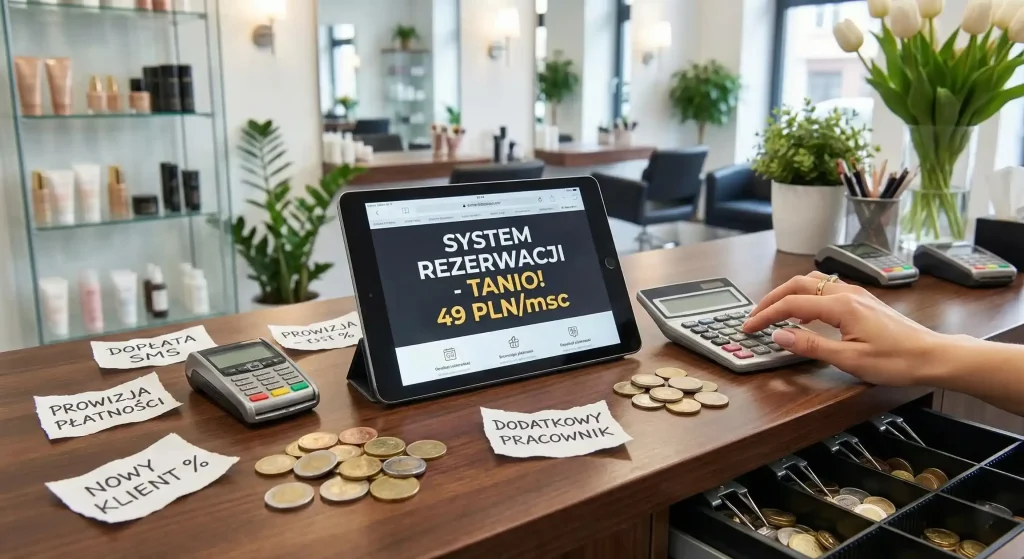
A cheap system can backfire. You see a low price on the home page, and a month later the bill looks completely different. Extra charges for SMS notifications, additional workstations, commissions on online payments, sometimes a percentage of every “new” client – and you no longer know what you’re actually spending.
Below we go through the pricing models one by one, so you can compare them calmly and pick the one that suits your salon.
Three cost models: what are they about?
Before you settle on a particular tool, think about what your salon needs more: peace and quiet in the schedule, or a flow of people from outside.
- Subscription (fixed monthly fee): You pay a specific amount for access to the features. This is the most predictable model. In a good month you pay the same, with nothing added as a “cost of success”. It suits salons (from 2 to 20 people) and specialists who want order in their data and their own client base under control.
- Commission per new client (acquisition fee): The logic is simple: the platform brings you people and you hand over a slice of the cake in the form of commission. It makes sense if your salon is in a new location and you need to fill the calendar quickly. With more expensive services, though, the acquisition cost can be very high, and you end up depending on the rules of an external portal.
- Free plan: Free versions usually come with considerable limitations: no SMS reminders, a cap on appointments or no statistics. It is a good option for testing for people working solo, who are only just checking whether their clients want to book online at all.
What you cannot see in the price list? 9 traps that only “pop up” in practice
Before you sign anything, read the “fine print”: these details decide whether a system is worth the money. For comparison, Terminka’s salon booking software pricing lists every plan, including the free one.
- The price of SMS: Are they included in the package, or do you pay for each one separately?
- Number of employees: Do you pay extra for every new person on the team?
- Additional workstations: Does the system count only people, or also, for example, rented chairs?
- Online payments: What commissions does the provider charge and is there an activation fee?
- Deposits and prepayments: Is this feature available on your plan?
- Reports and statistics: Do you have to pay extra to see how much you earn?
- Support and onboarding: Will someone help you move your client base over and set up service durations for free, or are you left on your own with it?
- Language versions: Can you send notifications in Ukrainian, for example, at no extra cost?
- Cancellation terms: How long is the notice period?
If what bothers you most is chaos in the schedule and phone calls in the middle of work, look for a solid subscription. If you’re short of clients, you can try commission, but watch what it costs you.
How to calculate whether it pays off without sitting in Excel?
You don’t need complicated formulas for this. Take two things into account: the time you lose booking appointments by hand, and the losses that come from someone not turning up for a treatment.
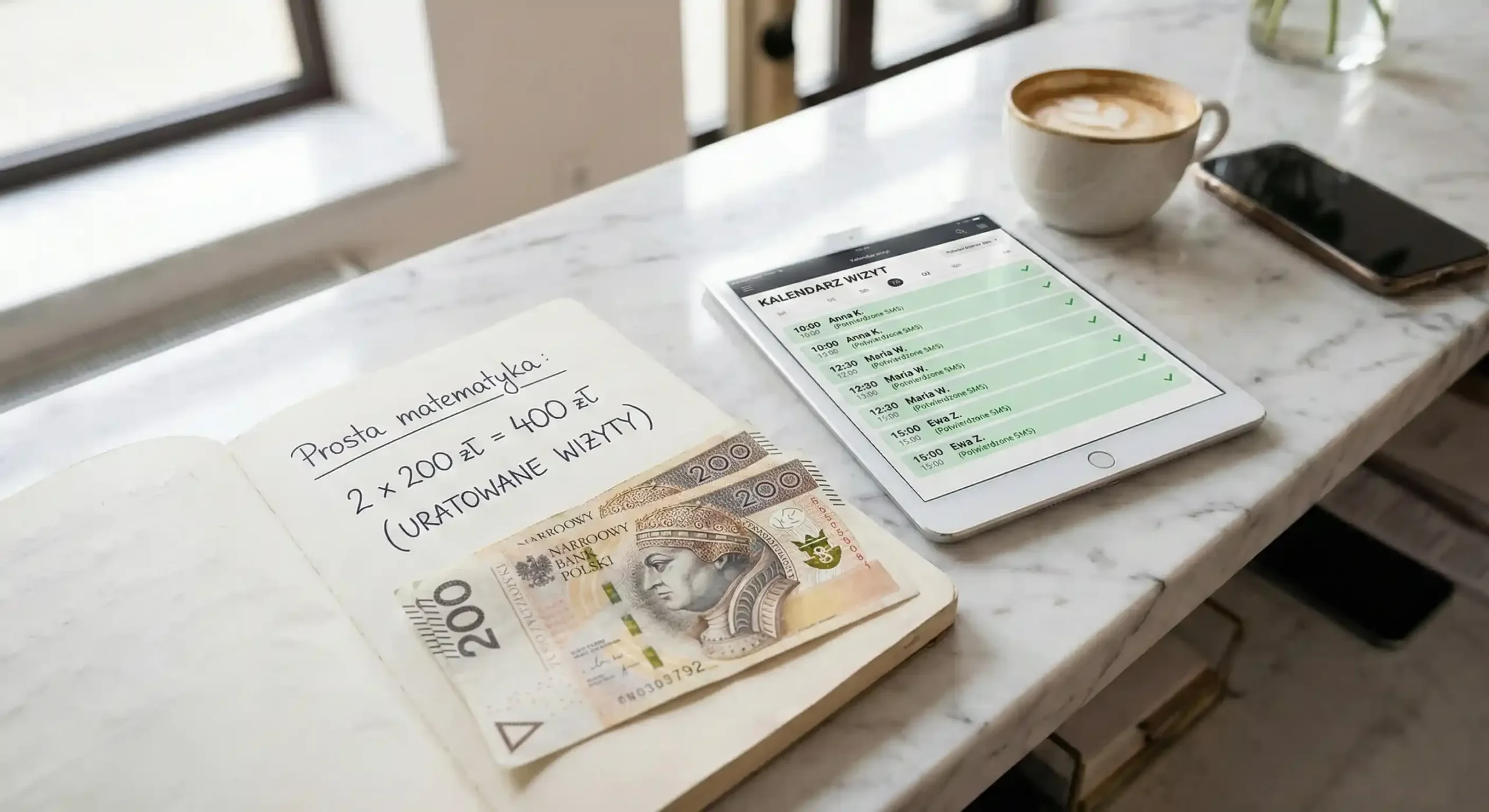
Let’s assume that your average appointment value is 200 zł. If automatic reminders “rescue” even two appointments a month, 400 zł stays in your pocket. Add to that the few hours a week you get back, because the phone stops ringing every quarter of an hour. In that scenario a subscription usually pays for itself in the first week, and the schedule has fewer gaps.
How to test a system without any risk?
It is best to start with a “mini version”. Do not upload your whole price list to the system straight away. Choose the 10 most popular services, set realistic durations for them and switch on reminders. Add a booking link to your Instagram bio and to your Google Business Profile. After two weeks, check how many people booked on their own and how many fewer private messages you had to send. If the schedule is filling up and you’re writing fewer messages, you can keep the system for good.
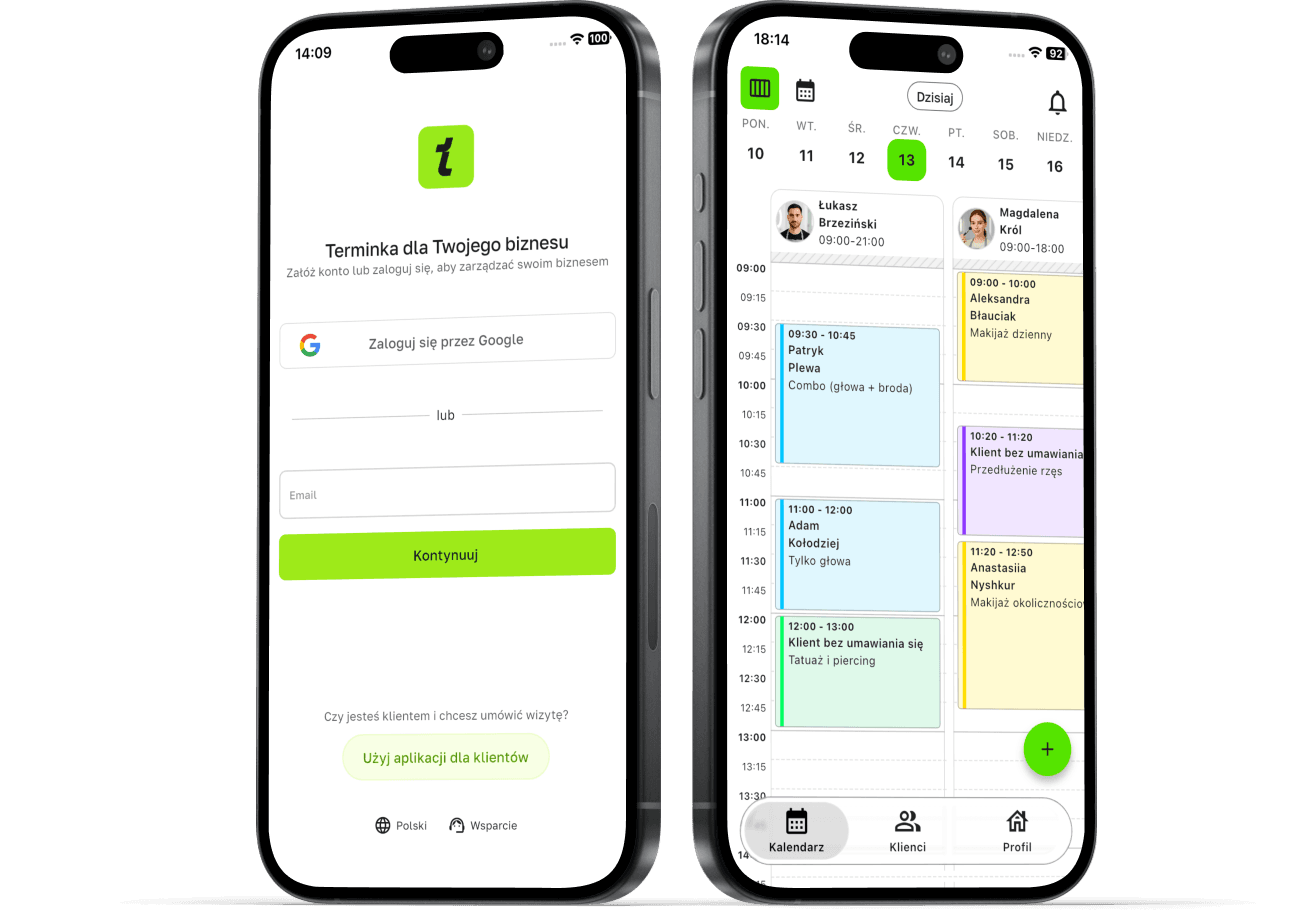
Do you want your spending fully under control and to pay for order in the salon, rather than for every single appointment?
Terminka lets you bring bookings from all your channels together in one clear schedule. You know exactly what you pay, and clients book on their own at any hour, including at night.
Try Terminka completely free for 14 days.
We will prepare a simple calculator for you that will help you work out how much you will really save thanks to booking automation. Get in touch with us!
